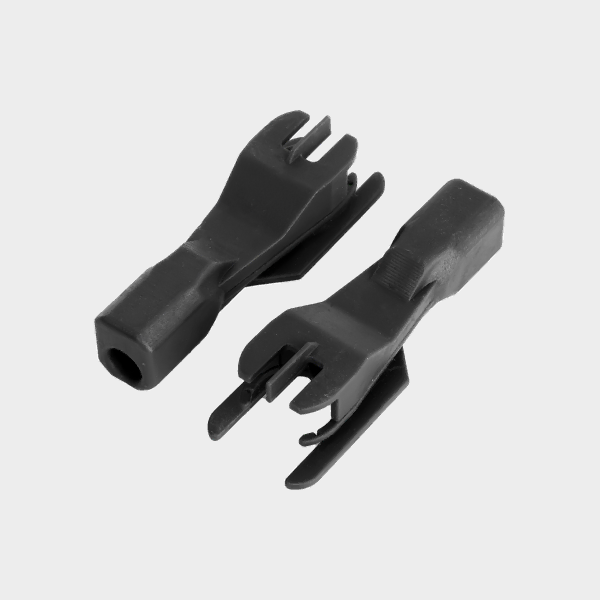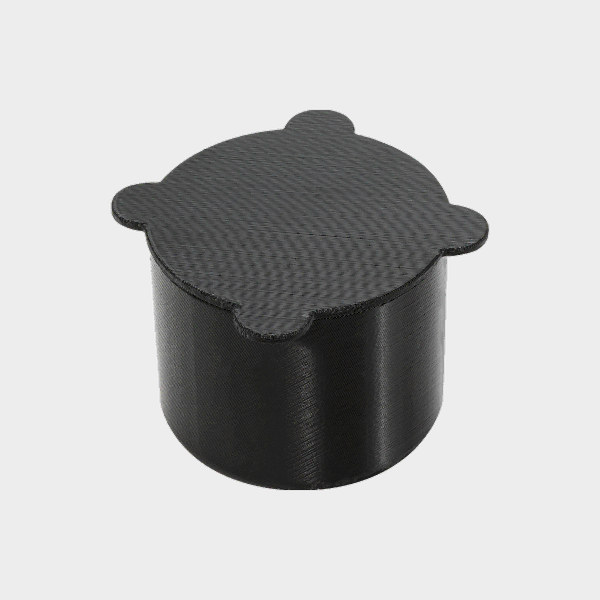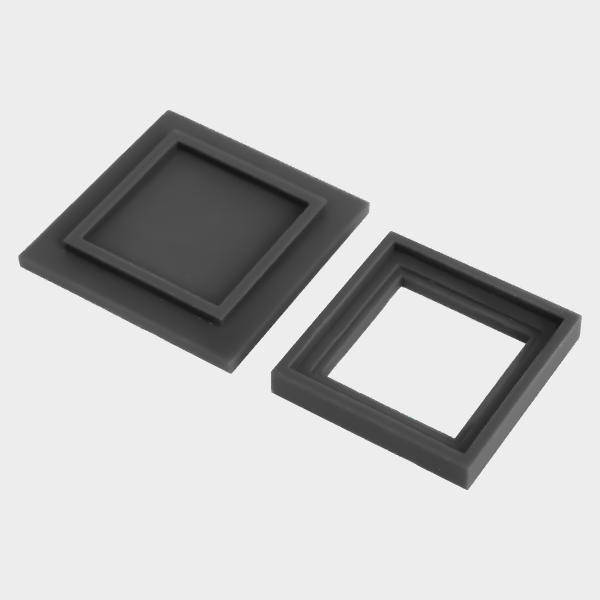

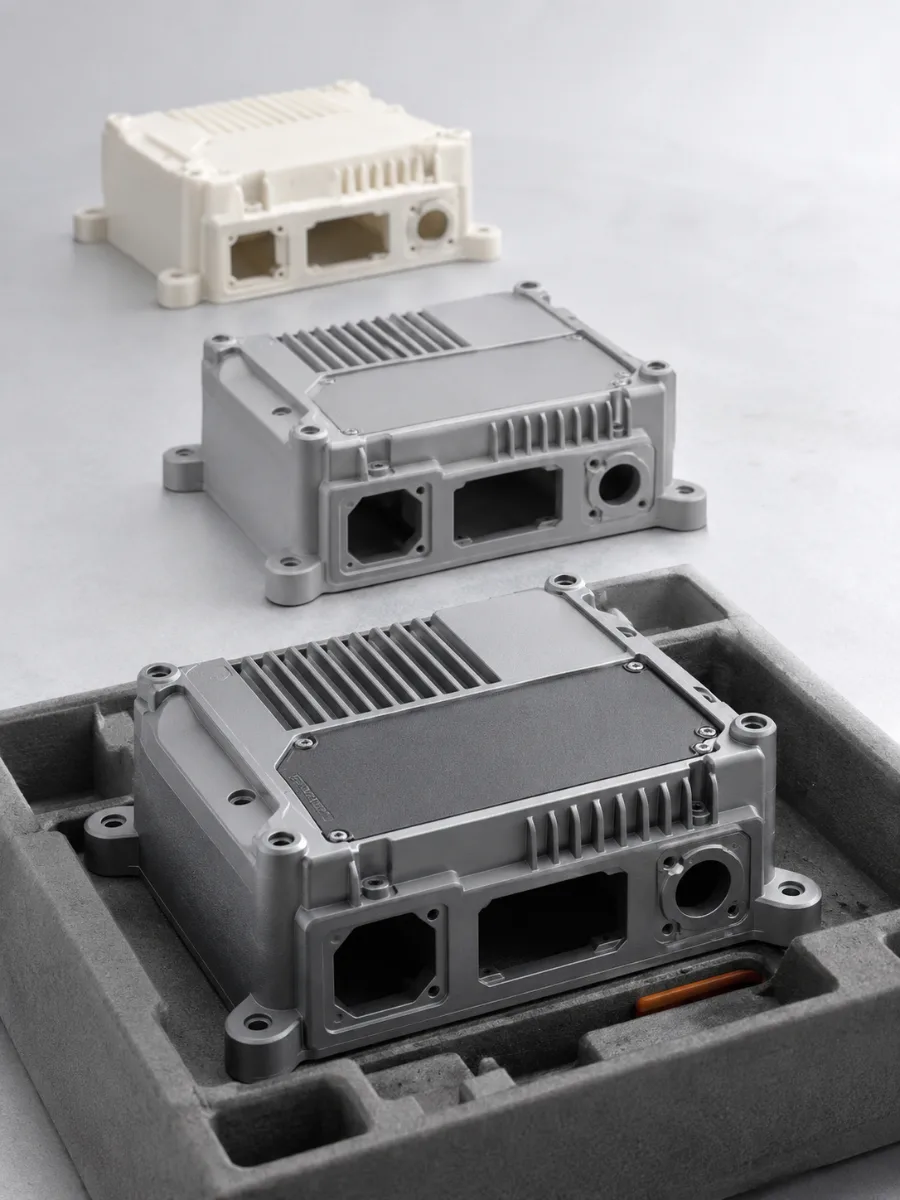

ABS 3D printed parts feature high rigidity, excellent impact resistance, and good heat stability. Performance tracks injection-molded ABS closely, which makes the process useful for functional verification before tooling.
ABS 3D Printing Service
ABS 3D printing produces rigid, impact-resistant parts whose behaviour stays close to molded ABS, which makes it a reliable route for functional prototypes and pre-production verification.
- Wall thickness from 0.6 mm
- Tolerances to ISO2768-C
- Parts up to 300 x 300 x 300 mm
ABS in 3D Printing
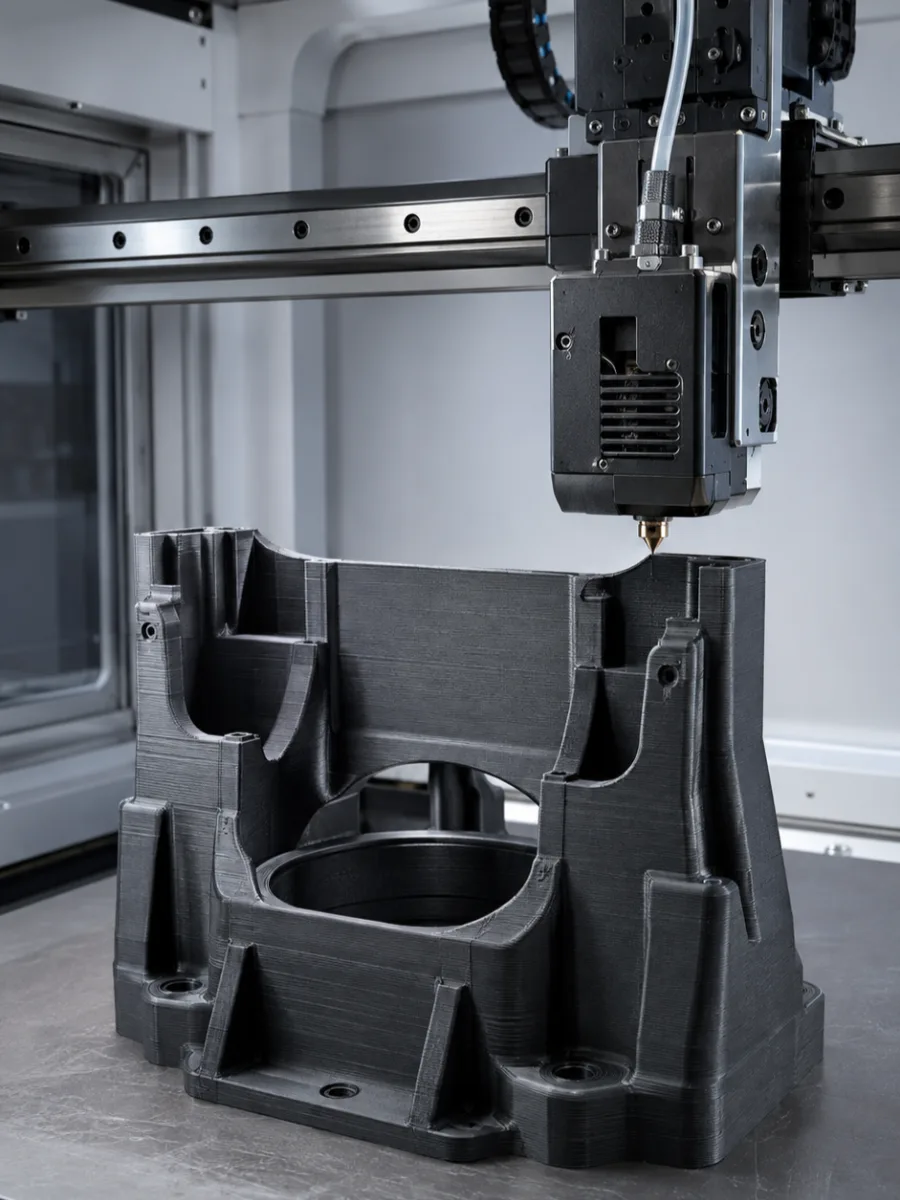
ABS prints into rigid parts with balanced hardness and toughness, so printed components survive collision and extrusion loads in functional and structural use. Its low moisture absorption keeps dimensions stable, and its properties track injection-molded ABS closely enough for pre-production checks. Overhangs and hollow sections need support structures, and finishing is available to reduce layer lines.
- Rigidity and impact resistance: Balanced hardness and toughness resist collision and extrusion damage in durable structural parts.
- Reliable heat stability: Keeps performance at normal ambient temperatures and resists thermal deformation better than common plastics.
- Post-processability: Sands, polishes, paints, and bonds easily for high-quality surfaces and precise assembly.
- Low moisture absorption: Minimal water uptake keeps dimensions stable and behaviour close to molded ABS.
Selection note: Thermoplastic shrinkage can warp large flat parts, overhangs and hollows require support structures, toughness drops sharply in extreme cold, and strong solvents or corrosive liquids will attack the material.
ABS 3D Printing Capabilities
| Wall thickness | From 0.6 mm |
|---|---|
| Tolerances | ISO2768-C |
| Max part size | 300 x 300 x 300 mm |
| Post-processing | Support removal, sanding, polishing, painting, UV coating, drilling, gluing |
ABS Material Specifications
Mechanical Properties
| Tensile strength, yield | 40 MPa |
|---|---|
| Elongation at break | 10 % |
| Hardness | 109 Rockwell R |
Physical Properties
| Density | 1.04 g/cm³ |
|---|---|
| Heat deflection temperature | 95 °C |
| Glass transition temperature | 108 - 109 °C |
| Melting temperature | 170 - 320 °C |
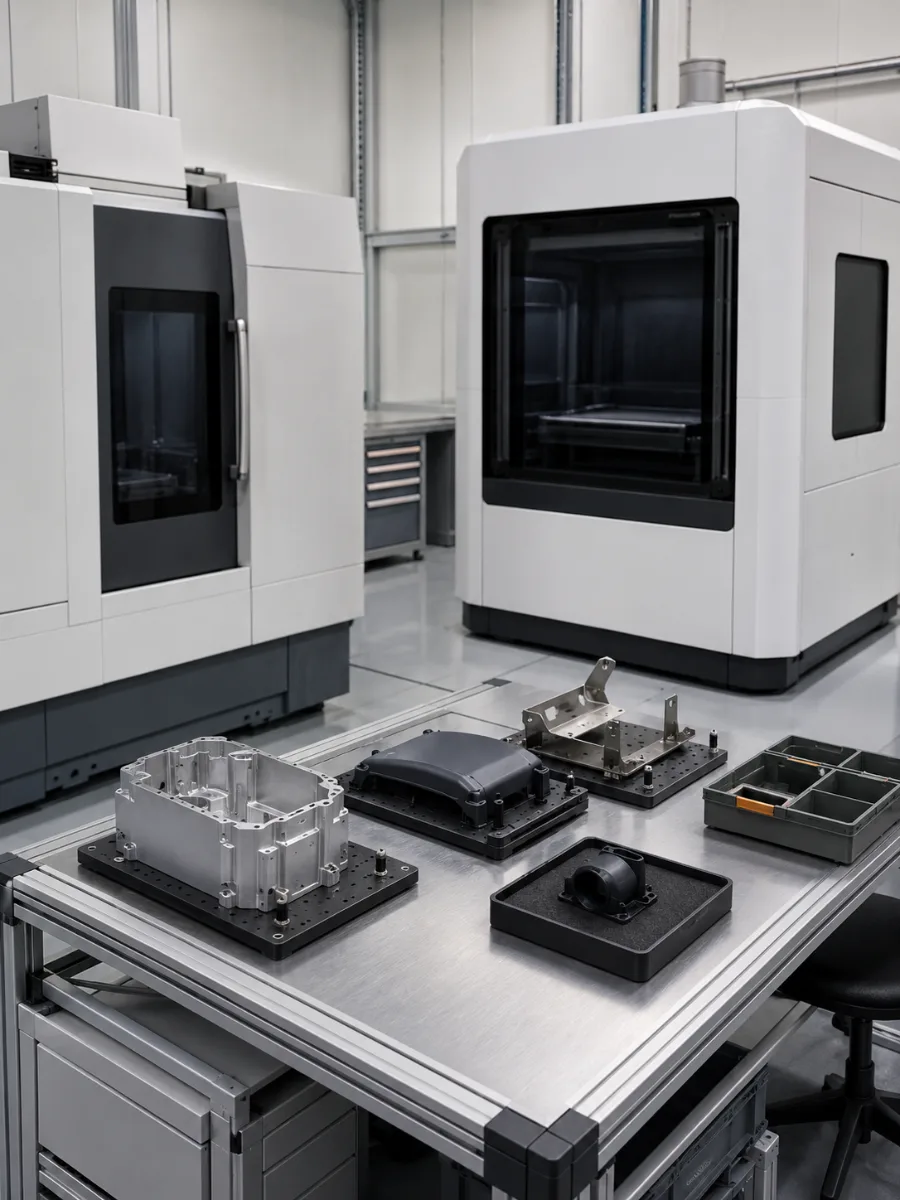
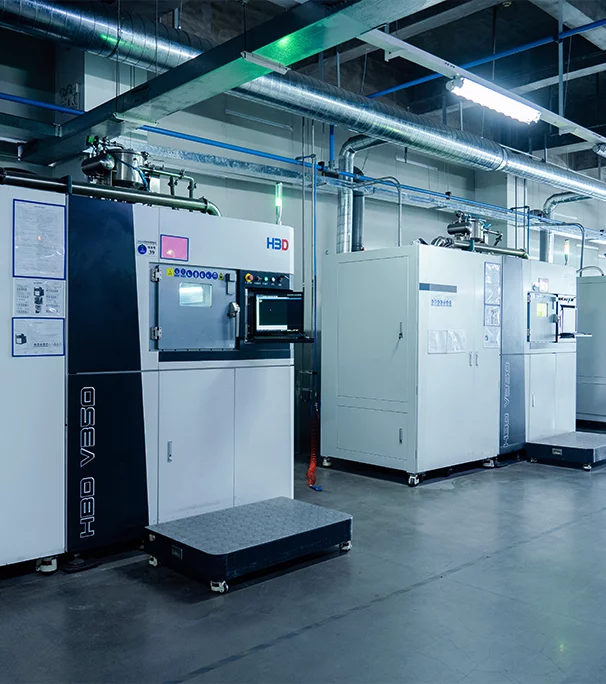
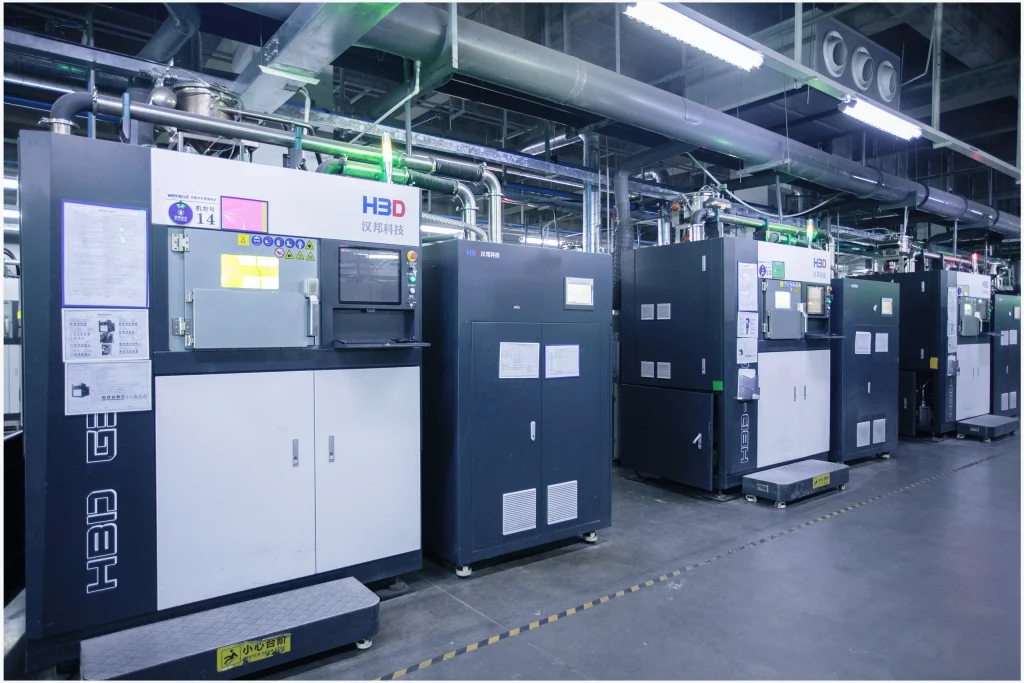
ABS Manufacturing Facilities
ABS Parts & Applications